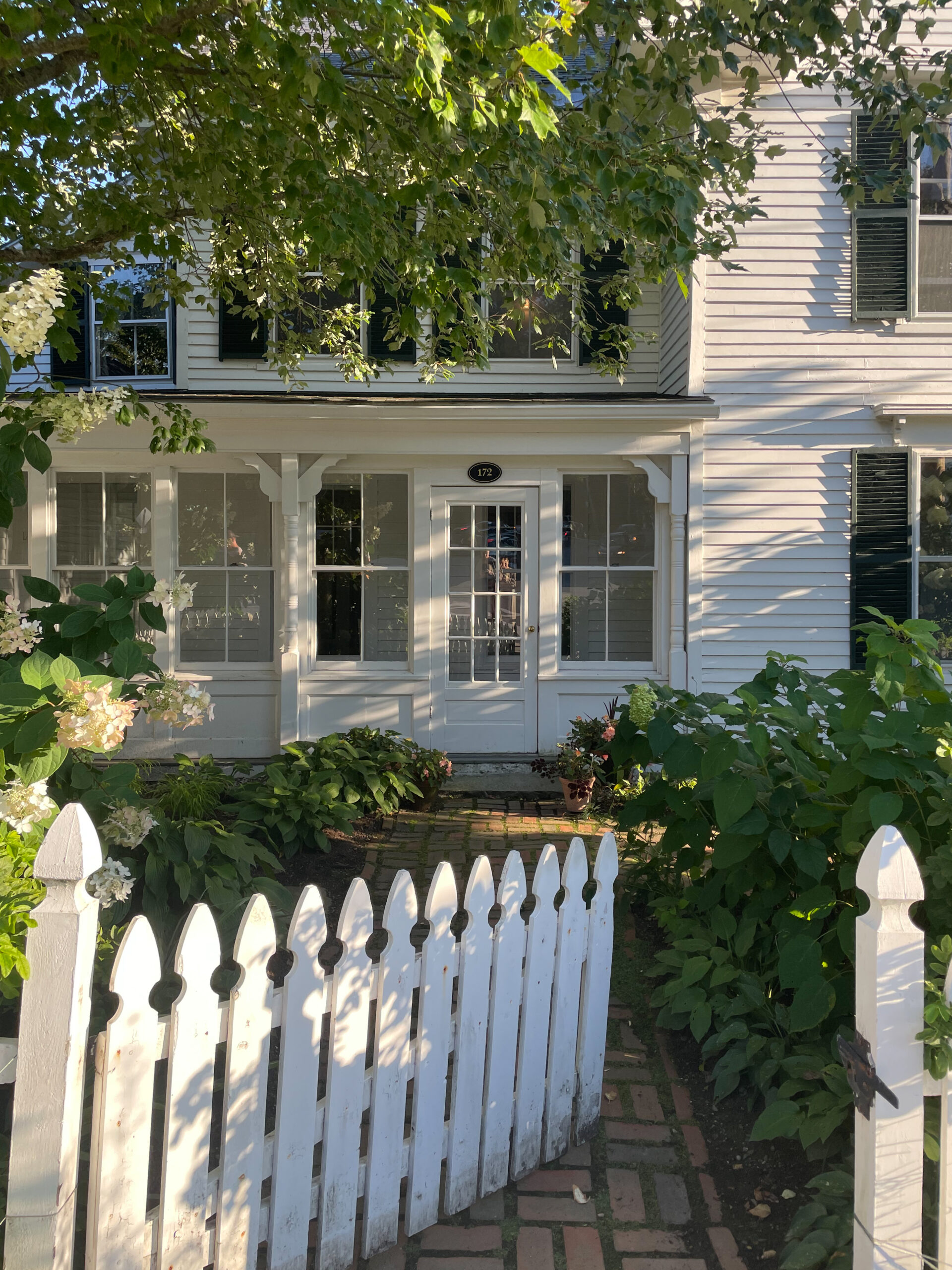

When we think about the forces that shape architecture, we often picture wealth: the ability to build, expand, update, or modernize. But as James L. Garvin points out in his book, A Building History of Northern New England, it was poverty – not prosperity – that preserved the architectural history we now treasure.
Across many rural towns in northern New England, generations of families lived in homes that were functional, modest, and unaltered. Garvin explains it so well –
“It is frequently noted that poverty is the friend of preservation. Where people are too poor to afford the luxury of remodeling or replacing their dwellings, old houses survive, provided that the roof is kept reasonably tight. We owe the survival of some of the most intriguing neighborhoods of our old coastal cities and of some of our most pristine farmhouses to hard times prolonged over several generations. If you can find an old house that has been owned by people of modest means, you stand a good chance of finding a home with architectural integrity. If you are a person of modest means, you could be the ideal custodian of such a house. You will be spared the temptation of making changes that are driven by mere fashion and that could spoil the building for a future owner.”

Poverty Became an Accidental Preservation Strategy
Families without disposable income lived in their homes much as the previous generations did. They lacked the financial means to renovate their kitchens, replace mouldings with the newest Victorian flourish, or add fashionable modern expansions. Instead, they heated with the same fireplaces, walked the same pine floors, and slept beneath the same hand-hewn beams that their great-grandparents once touched. Not because they were trying to preserve history, but because preservation was the only option.
These homes became time capsules. And while we should have empathy for the strain that poverty causes, the byproduct is something we now deeply value: early building methods, craftsmanship that would have otherwise vanished, and hundreds of homes preserved with their original character intact.

When Money Arrives, Authenticity Often Disappears
Homeowners who did have the resources to update or expand their homes often did so enthusiastically and with good intentions, but with ignorance. In doing so, many stripped away the very elements that made the home historic. And this continues today. Original windows are replaced with energy efficient or trendy alternatives. Federal or Greek Revival details are swapped for simplified mass-produced trim. Simple Colonial plans are enlarged beyond recognition. These are the ways we have, and continue to, erase history.
Progress feels exciting in the moment, but time has a way of revealing what’s been lost. There’s a finite number of historic homes left, and it’s diminishing each year.

Original Windows Lost In The Wake Of Energy Efficiency
Brent Hull, a master builder and expert on historic preservation speaks on historic renovations frequently. Perhaps his most passionate stance is on the preservation of old windows. While many homeowners equate old windows with energy inefficiency and money wasted, Hull makes a strong argument, with studies to back him up, that replacing old windows does more harm than good. See his 5 reasons for keeping historic wood windows here.
Studies have shown that the cost of replacing all your old windows with new energy efficient windows will take around 40-100 years to recoup financially. All the while, new windows today are only built to last 20-30 years. Chances are, you won’t get to the payback.
Not to mention, old windows are a defining design element of every historic home. They speak to the era and add immense character. Replacing them erases a significant part of the home’s architectural and historical identity.
So what’s the remedy? Restore old windows. Many are salvageable and there are companies that take on such projects. Concerned about energy efficiency? Install storm sashes such as this for winter (skip to 3:23 in the video) to improve energy efficiency.
History Holds Higher Resale Value
We’re blessed to see a resurgence of interest in honoring historic architecture in the design world, yet we still see beautifully historic homes get stripped down to studs. Remodels are driven by trends, personal taste, practicality, energy efficiency, or the pursuit of “modern living,” but it should be noted that original historic character holds far more value than whatever replaces it.
As Garvin so eloquently says, “Careful preservation of the original qualities of your house will invariably enhance its resale value. A heavily remodeled old house…loses the integrity of its own period, and so becomes less than it was before the remodeling.”

We Are Not Owners. We Are Custodians.
Today, renovations are more accessible, design trends move faster than ever, and remodels are almost expected as the pressure to modernize is constant. But remember, “You are but one in a long line of custodians of the property.” Garvin reminds us.
This doesn’t mean you need to freeze your home in time or avoid meaningful upgrades. It simply means that when you approach an old house, you do so with thoughtfulness, an understanding of the architecture, and respect. Before replacing something, ask:
- Is it truly beyond repair?
- Is this original to the home?
- Would a future owner wish we had saved it?
- If replacement is necessary, can I find a period appropriate match?
Our choices can either extend the story of an old home or erase it. Historic architecture survives only when each generation cares enough to pass it to the next. If poverty once protected these homes, then let intentionality do the work now. Let your stewardship become part of the home’s history, not the chapter where its character was lost.
This post contains affiliate links.
Resources On Historic Architecture
SCROLL RIGHT TO VIEW THE FULL LIST →
Leave a Reply
Where behind the scenes, exclusive advice, and candid conversations are sent straight to your inbox every week.
The Inside Scoop
DO YOU WANT

Very interesting article!
Thank you! It’s a fascinating thing to ponder!
The his is a very good article Danica!! Thank you!
Thank you so much! 🙂